Jams & Preserves
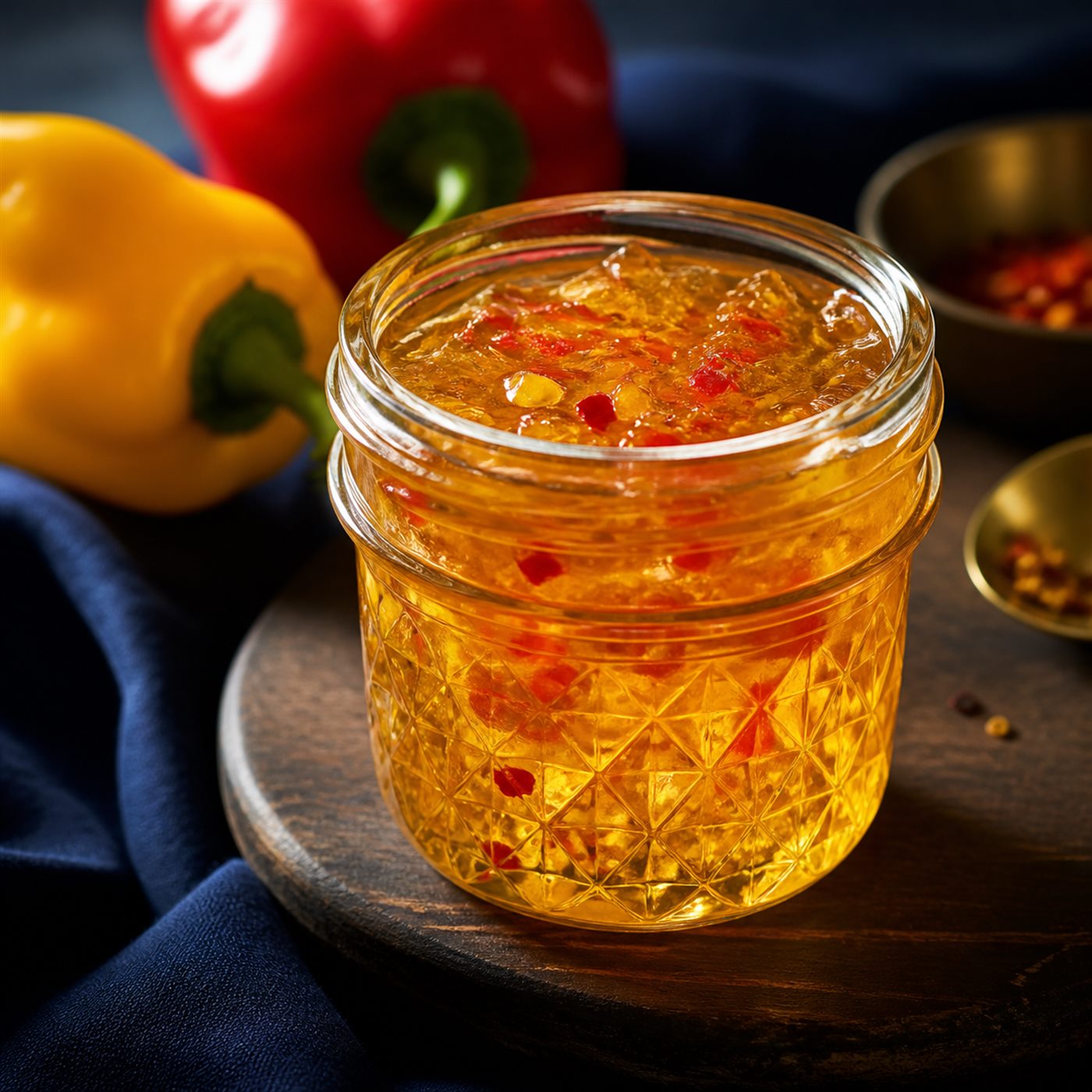
Golden Pepper Jelly
A jewel-toned sweet pepper jelly with a gentle Serrano warmth, made from a tested University of Georgia formula.
Gather
Ingredients
- 5 cups chopped yellow bell peppers
- 1/2 cup chopped Serrano chile peppers
- 1-1/2 cups white distilled vinegar (5% acidity)
- 5 cups granulated sugar
- 1 pouch (3 oz) liquid pectin
Preserve
Instructions
- 01
Wear plastic or rubber gloves while handling hot peppers. Wash all peppers; remove stems and seeds, but leave the hot-pepper membranes in place.
- 02
Pre-sterilize half-pint jars and keep them hot. Prepare lids and bands according to the manufacturer’s directions.
- 03
Purée the sweet and hot peppers with enough of the measured vinegar to help them blend.
- 04
Combine the pepper purée and remaining vinegar in an 8- to 10-quart saucepan. Bring to a boil and boil for 10 minutes.
- 05
Take the pan off the burner, then filter the mixture using a jelly bag or several layers of cheesecloth.
- 06
Measure exactly 2-1/4 cups strained pepper-vinegar juice into the saucepan. Stir in the sugar and bring to a boil.
- 07
Stir in the liquid pectin and bring the mixture back to a vigorous boil. Keep it boiling for 1 minute while stirring without pause, then take the pan off the heat and promptly skim away foam.
- 08
Spoon the hot jelly into heated half-pint jars, allowing 1/4 inch headspace. Clean the rims, then fit the prepared lids and bands.
- 09
Use the tested boiling-water process: 5 minutes (base time).
Calculate your elevation adjustment →
NCHFP — Golden Pepper Jelly
Canning Vault independently summarizes the tested controls in practical language; the linked authority controls an actual batch. Read our publication standards.
Review the original source ↗Keep exploring